
L2L HOMES
Expertise. Integrity. Reliable


 |  |  |
|---|---|---|
 |  |
FAQ - FINAL PRACTICAL INSPECTION
WHY DO I NEED FINAL PRACITICAL COMPLETION INSPECTION?
The Practical Completion Inspection (PCI) is a very important inspection for new homeowners to identify any defects and get them fixed before handover. A lot of people think that inspections of new houses are not required because they are carried out by the building surveyor. The fact is, the building surveyor ensures the building is technically habitable while our inspection by contrast is focused on the completeness and quality of the workmanship and is concerned with the delivery of exactly what is been agreed upon in your contract. For most of the new home owner the whole building process is generally an emotionally stressful time to deal with the builder. Identifying defective workmanship or contractual anomalies during construction can help avoid problems and building disputes down the track. What we inspect at practical completion inspection stage are according to the Australian Standards, the Building Code of Australia (BCA), the relevant engineer’s drawings and specifications, VBA guidelines to standards and tolerances 2015.
WHAT IS THE TECHNOLOGY WE USE?
Our Building Inspectors will arrive at your property armed with the latest technology to enable more efficient and faster detection of building defects
Moisture Meter----- When applied to a surface this may detect high moisture levels behind plaster sheeting and brickworks due to leaking pipes, failure waterproofing or rising damp
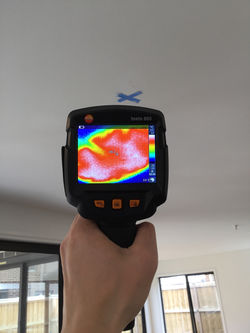
Infrared Thermal Imaging Camera----- When applied to building application infrared thermal imaging camera
-
Detect missing or defective insulation cause energy loss
-
Locate water leaking in roofs
-
Identify moisture caused by water pipes leaking
-
Locate termite activity and nest
Crossline laser level----- When applied to a surface this may detect it may detect uneven floor
Termatrac T3i----- an advanced termite detection device in detecting and confirming the presence of termites by using radar technology along with thermal and moisture sensors
WHAT ARE COMMON DEFECTS IN FINAL PRATICAL COMPLETION INSPECTION?
-
Concrete slab shrinkage cracks
-
Chipped or broken brick, mortar void and not cleaned
-
Cracked or broken roof tiles, incorrect flashing installation lead to water leaking
-
Poor finish tiling, floorboard and carpet
-
Paint runs, paint sags, surface cracks and coarse brush marks
-
Trap leaking under the sink, leaking pipe
-
Faults and damage to appliances and fittings
DO I GET TO CHOOSE WHICH STAGE INSPECTION IS REQUIRED?
The answer is yes but certain defects need to be identified at the correct stage in order to be easily rectified, for example, if wall framing is not square and plumb before it gets covered up by insulation and plasterboard it is significantly more difficult and costly to rectify these defects. This can often have a flow-on effect that can impact on other things such as walls and ceilings being bowed, or tiling being out of square.
For any further questions contact our office and let one of our staff resolve your doubts.